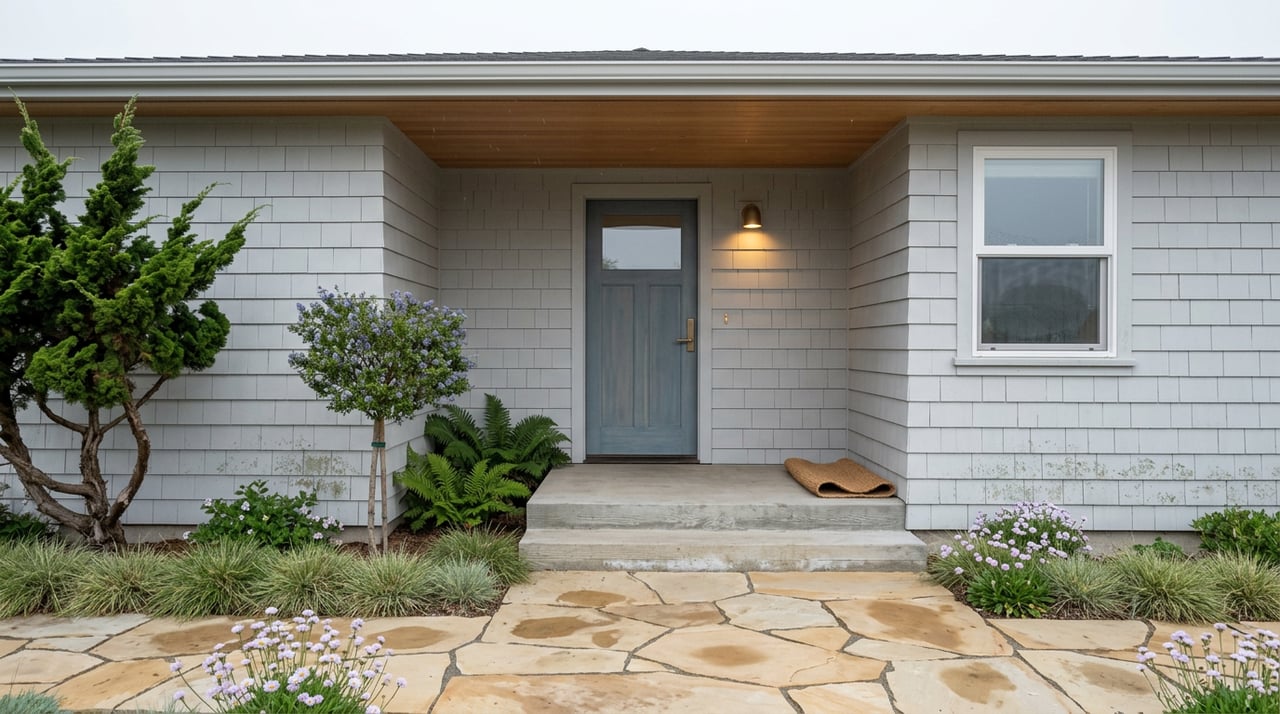
Moss Beach's Tide Pools Are Coming Back. Most People Are Still Checking the Wrong Number.
August 20, 2026
August 20, 2026
Everyone who has ever lived near Fitzgerald Marine Reserve has given the same advice to a visiting friend: check the tide chart, go at low tide. It's true, and it's also the least useful part of the story. The number that actually determines whether you see anything down there isn't the tide chart's zero line. It's one foot. According to the Friends of Fitzgerald Marine Reserve, the volunteer group that has staffed the reserve's green-jacketed docent program for decades, tidepool creatures are most visible when the low tide reads one foot or less. A tide of two or three feet still counts as "low" on paper. It's also often still deep enough that the reef stays underwater and the walk becomes a shrug.
That's the small correction worth making before anything else. But the bigger story this year is what new marine biology research may mean for those pools: a genuinely rare discovery from earlier this year has quietly changed the calculus for anyone who's walked past those rocks a hundred times and stopped expecting surprises.
The reserve opens at 8 a.m. every day of the year, holidays included. Timing your visit around the tide table alone will get you close, but the window that actually rewards you is narrower and starts earlier than most people plan for. The richest viewing happens in the one to two hours before the tide bottoms out, while the water is still receding and creatures haven't yet retreated to sheltered crevices. Arrive right at the posted low and you've already missed the best hour of the show.
There's also a seasonal rhythm to which days are worth the trip at all. The lowest low tides cluster around the full moon and new moon each month, which means the calendar, not just the daily chart, tells you when to circle a date. Skip the mid-cycle days entirely if you're chasing the reef, not the parking lot.
For most of the last decade, the honest answer to "what will I see" has been a shorter list than it used to be. Sea star wasting disease tore through the West Coast starting around 2013, and the sunflower sea star, once a signature find at Fitzgerald, simply stopped showing up. Ochre stars, bat stars, and leather stars held on and remain the reliable sightings today, usually tucked near mussel beds or wedged into rock crevices where the ochre star in particular likes to sit in plain purple or orange.
The disease itself remained a mystery until last year. In August 2025, researchers publishing in Nature Ecology & Evolution identified the culprit as a strain of the bacterium Vibrio pectenicida, closing out more than a decade of guessing about what had caused the largest documented marine epidemic in the wild.
Then, earlier this year, NOAA researchers using a new environmental DNA detection method surveyed 39 California sites, including former hotspots and areas near marine protected zones. They found genetic traces of sunflower sea stars at six sites spanning Mendocino, Sonoma, and San Mateo counties, including the first detection south of San Francisco in a decade. No one's reporting a sunflower star sighting at Fitzgerald itself yet. But the detection landing in San Mateo County, in the water this coastline shares, is the first real evidence in years that the species hasn't simply vanished from the region. It's the kind of update that doesn't show up in a typical day-trip guide because it isn't visual yet. It's DNA in a water sample. But it's the difference between a reef in permanent decline and one that might be starting to turn a corner.
Right now, through the end of August, the reserve closes at 7 p.m. Come September, something small and easy to miss happens. For the first week of the month, up through Labor Day, closing time jumps to 8 p.m., an extra hour of evening light. Then, the very next day after Labor Day, it drops straight back to 7 p.m. If you've built a late-summer habit of an after-work walk timed to that 8 o'clock window, the calendar takes it away in a single evening, not gradually.
The rest of the year steps down from there: 7 p.m. through early October, 6 p.m. for the back three weeks of the month, and down to 5 p.m. by December through February before climbing back up as daylight saving time returns in spring. None of it is announced with fanfare. It's just posted on the reserve's own site, and it's worth checking before you plan an evening low tide that might already be past closing by the time it arrives.
Not every trip lines up with a good tide, and the reserve doesn't waste the visit even then. The Bluff Trail near the entrance climbs through a grove of wind-carved Monterey cypress, part of the stretch of California Coastal Trail that runs along the top of the reserve, and the Seal Cove Staircase drops down toward the beach for those who want the ocean view without the reef. From December through March, the same bluffs offer a decent shot at spotting the spouts of migrating gray whales offshore.
One detail that trips up dog owners: leashed pets are allowed on the Coastal Trail segment at the top of the bluff, but not down on the beach or the interior trails that lead to the tide pools themselves. It's an easy rule to miss if you're used to more permissive dog policies at other Coastside beaches.
Fitzgerald sits inside the Montara State Marine Reserve, a protected area under California's Marine Life Protection Act, which means the standard etiquette isn't a suggestion. Look, don't touch. No turning over rocks, no collecting, no placing anything in a bucket. A few years back, a marine expert examining what a young visitor excitedly called a sea star confirmed it was actually a leather star already showing early signs of deterioration, a small reminder that even the recovering populations here are being watched closely by people who know what early trouble looks like.
That watching isn't limited to county rangers. The Friends of Fitzgerald Marine Reserve trains the volunteer docents in green jackets who answer questions on busy weekends, and community groups on the Coastside have organized their own guided walks timed to negative tides, pairing local docents with neighbors who want the context behind what they're stepping around. It's a small, recurring piece of how this stretch of coast polices its own reef.
Locals rarely treat a tide pool trip as a standalone errand. The Moss Beach Distillery sits close enough to the reserve that it's the default stop for fresh seafood after a cold, windy walk on the rocks, and the historic building has been part of that routine for longer than most current residents have lived here. A short drive down the road, Half Moon Bay Brewing Company keeps outdoor fire pits going for anyone who wants to warm back up before heading home. For visiting family who want to stay the night, the Seal Cove Inn, wrapped in its own cottage garden a few blocks from the reserve, is the version of a splurge that doesn't require leaving the neighborhood.
None of this changes because a listing goes up or a market report comes out. It's just what Tuesday looks like here when the moon's right and the tide's low enough to matter.
If you're a longtime neighbor thinking about what's next for your own place on the Coastside, or you're just curious what your home might be worth in today's market, Matt Aragoni is a phone call away for a free Coastside home valuation or a no-pressure conversation about the local market. Reach out whenever the timing's right, no tide chart required.
This article is general information, not legal, tax or financial advice. Consult a qualified professional about your situation.
Stay up to date on the latest real estate trends.

I am your San Mateo County Real Estate Expert, growing up San Mateo County has given me a highly specialized insight into the local markets here. I provide my clients/network with the most up-to-date market info, local expertise, and 5 Star Quality Client Service.