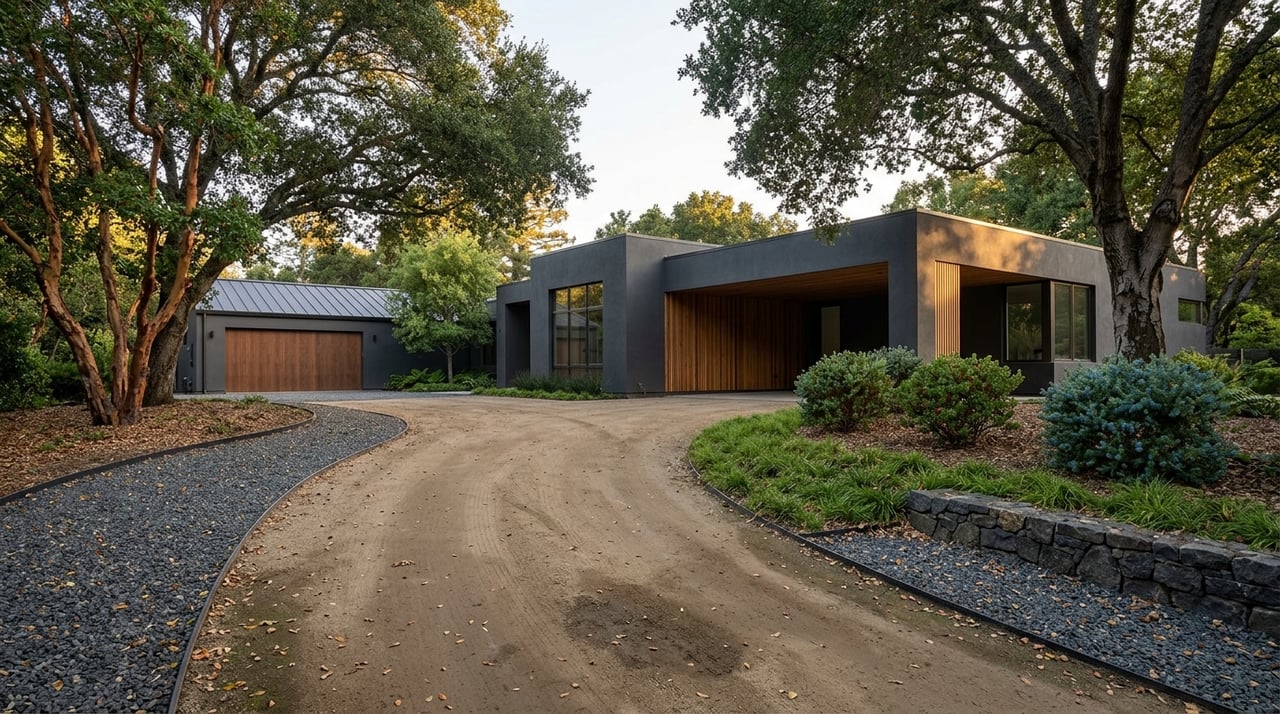
What It’s Really Like To Live on Acreage in Woodside
June 4, 2026
June 4, 2026
Dreaming about more land, more privacy, and room to breathe in Woodside? Acreage here can absolutely deliver that feeling, but it does not work like a typical suburban property. If you are considering a larger parcel, it helps to understand that Woodside’s appeal comes with real day-to-day responsibilities, ongoing property management, and local rules designed to protect the town’s rural character. Let’s dive in.
Woodside is planned as a scenic, rural residential community, not a conventional suburban one. The Town’s General Plan is clear that the goal is to preserve and enhance that rural setting, with residential areas that may include agricultural uses, horse trails, pedestrian and bicycle paths, and other low-intensity uses.
That planning approach shapes how acreage feels when you live there. In the RR district, parcels are defined as 3 acres or larger, and the land itself tends to lead the experience. Open space, meadows, woodlands, wildlife corridors, and natural terrain are meant to stay central rather than being pushed aside for heavy site alteration.
In practical terms, that means homes and improvements are expected to fit the land, not the other way around. Woodside’s design guidance emphasizes preserving scenic corridors, natural features, and the broader rural setting that makes the town distinct.
Many buyers are drawn to Woodside acreage for privacy, and that is a real benefit. Larger parcels can create more separation, quieter surroundings, and a sense of retreat that is hard to find elsewhere on the Peninsula.
At the same time, privacy in Woodside is not treated as unlimited freedom to build or screen however you want. The Town’s residential design guidelines ask property owners to consider neighboring structures, barns, private living areas, significant trees, views, and the privacy of others when planning site improvements.
That makes the experience different from a standard large-lot purchase. You are not just buying square footage outdoors. You are stepping into a landscape where your choices are expected to respect the site, the trail network, and nearby properties.
One of the biggest realities of living on acreage in Woodside is that the property keeps asking for your attention. A larger parcel can give you flexibility and breathing room, but it also creates an ongoing maintenance list that is simply bigger than what most homeowners are used to.
That may include driveway upkeep, drainage planning, vegetation management, fencing, tree care, and oversight of water or wastewater systems. If you are used to a more compact lot, the amount of coordination can come as a surprise.
Even simple improvements can become more involved on acreage. Woodside’s site planning expectations include driveways, yards, agricultural or equestrian uses, and conservation areas, so changes often need to be considered as part of the whole property rather than as isolated projects.
The Town also requires permits for driveway construction and for grading, fills, excavations, clearing, or stockpiling above certain thresholds. That means projects that might feel minor at first can quickly become something you plan carefully with the proper approvals.
Fencing in Woodside is also shaped by the town’s rural character. The local guidelines favor open, wildlife-friendly fencing and discourage solid walls or overly elaborate entry features.
Owners are also expected to avoid creating fenced “tunnels,” especially along equestrian trails. Fence and gate projects must account for setbacks, easements, and trail corridors, which makes placement and design more important than many buyers first expect.
Landscaping on acreage is rarely just about looks. Woodside encourages drought-tolerant and native plants, natural vegetation, and informal landscaping that blends with the site rather than creating a highly formal or visually screened effect.
The Town also warns against linear planting that acts like a green wall. On top of that, tree removal is regulated. According to the Town, all tree species require a Tree Destruction Permit, although some removals may be waived under the defensible-space and home-hardening program.
For some properties in San Mateo County, water and wastewater systems add another layer of planning. If a parcel is served by a septic system or individual well, Environmental Health review can be triggered by changes such as adding bedrooms, expanding a structure, building accessory improvements, regrading, or altering drainage, landscaping, or hardscape.
The County also regulates domestic and agricultural wells and springs, including construction, output, and water-quality testing. If you are looking at acreage, it is smart to understand early how these systems may affect future plans for the property.
Woodside’s rural image is not just aesthetic. The Town explicitly encourages keeping livestock, especially horses, as part of its rural character. That is one reason acreage living here feels so distinct from other Peninsula markets.
The Town’s design guidelines support equestrian facilities and the trails network, and Woodside provides unusually specific rules for private horse keeping. If you want horses, hobby animals, or a small-scale working property, this is a place where that lifestyle is recognized and structured.
A private stable permit is required in Woodside, and no horse may be kept for more than 30 consecutive days without one. The Town states that these permits are issued annually.
Under the current Town fee schedule, private stable permits are $7 annually, and there is a trail maintenance fee of $50 per horse, capped at $1,250 per stable. Those fees are not usually the biggest issue. The larger consideration is whether the property can meet the Town’s actual standards.
Woodside’s private stable code sets specific minimums for horse properties, including:
There are also setback and fencing rules for certain equestrian uses, including turnouts near trail easements. So if horses are part of your plan, you will want to evaluate the site carefully, not just the house.
The biggest tradeoff with Woodside acreage is often this: you gain space and privacy, but you also take on ongoing compliance and landscape stewardship. Fire preparedness is a major part of that equation.
The Woodside Fire Protection District says its local ordinances apply to all properties in the District and may be more restrictive than state minimums. Year-round hazard-abatement rules require defensible space around structures, including 100 feet of managed space with Zone 0, Zone 1, and Zone 2 expectations.
This is not a one-time seasonal project. The Fire District performs annual defensible-space inspections in the Wildland Urban Interface and also offers home assessments, which means wildfire readiness becomes part of how you maintain the property over time.
Depending on the parcel, your routine may include:
The Fire District notes that residents in Firewise sites may organize contact lists, hold meetings, conduct evacuation drills, do neighborhood walks, and participate in chipper days. The Town also offers a matching fund program for defensible-space and home-hardening work, reimbursing 50% of eligible costs up to $3,000.
If you are thinking about acreage in Woodside, it helps to view it as a lifestyle decision first. The General Plan makes clear that land division opportunities are limited and require environmental review, so this is not usually a market where buyers should assume easy future subdivision or major site reconfiguration.
That does not lessen the value of acreage. It simply reframes it. The real reward tends to be the experience of living with more land, natural surroundings, privacy, and equestrian or agricultural potential, while accepting the responsibilities that come with managing a live landscape.
For the right buyer, Woodside acreage can be incredibly rewarding. You may gain room to spread out, a stronger connection to the land, equestrian potential, scenic surroundings, and a setting that feels genuinely rural while still being part of San Mateo County.
The key is going in with clear expectations. Living on acreage here often means managing driveways, fences, trees, drainage, defensible space, and in some cases wells, septic systems, or stable requirements. The appeal is real, but so is the workload.
If you are weighing whether a Woodside acreage property matches your goals, it helps to have a local guide who understands how lifestyle, land use, and property constraints intersect. For tailored insight on Woodside and other San Mateo County lifestyle markets, connect with Matt Aragoni.
Stay up to date on the latest real estate trends.
I am your San Mateo County Real Estate Expert, growing up San Mateo County has given me a highly specialized insight into the local markets here. I provide my clients/network with the most up-to-date market info, local expertise, and 5 Star Quality Client Service.