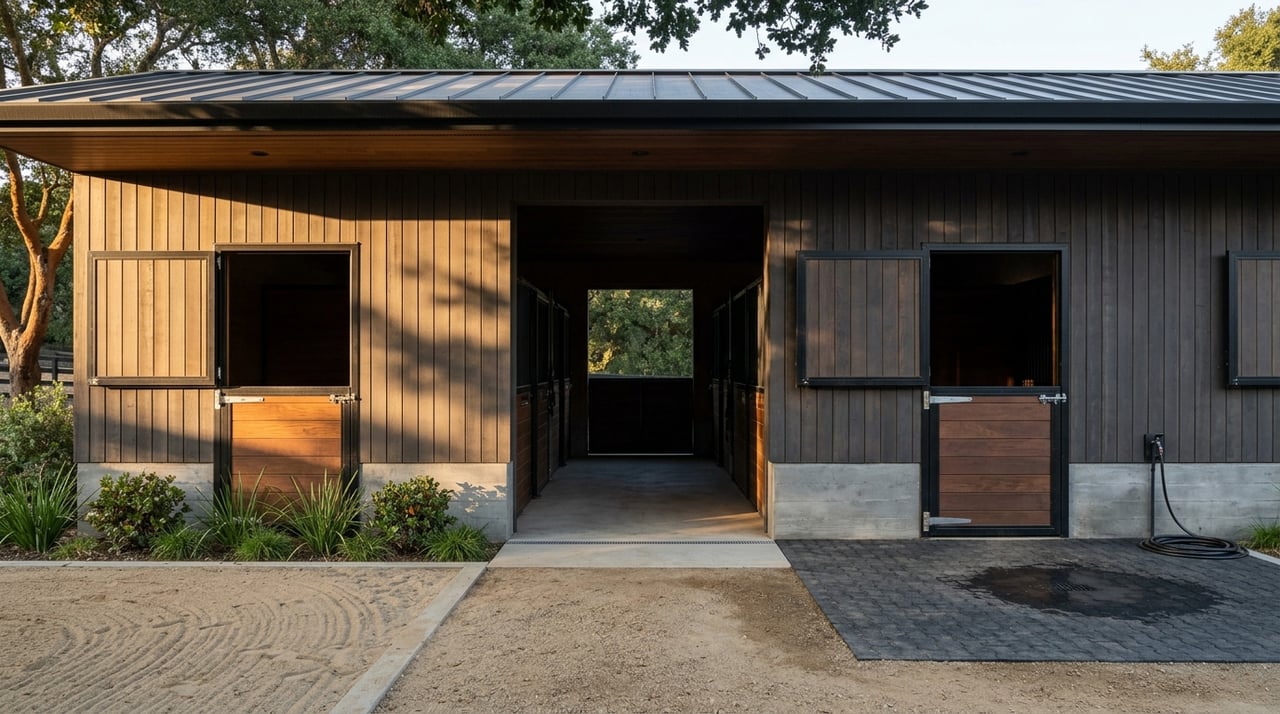
Buying Equestrian Property in Woodside: A Practical Guide
April 9, 2026
April 9, 2026
If you are thinking about buying equestrian property in Woodside, you are not just buying a home with land. You are buying into a town where horsekeeping, trails, and land use rules are closely connected. That can be exciting, but it also means you need to look beyond the barn and pasture photos. This guide will help you understand the practical questions to ask so you can evaluate a Woodside equestrian property with more confidence. Let’s dive in.
Woodside has a long-standing equestrian identity, and the Town actively supports that character. According to the Town’s Trails Committee, Woodside is dedicated to protecting, preserving, and enhancing its public equestrian and pedestrian trail system.
For you as a buyer, that matters because trail culture is part of the area’s appeal. It also means properties are often discussed in terms of trail access, horsekeeping potential, and permit compliance, not just square footage or finishes.
Before you fall in love with a property, confirm the parcel’s exact zoning. The Town maintains zoning maps and district standards, and those details can shape what you can realistically do with the land.
In the RR district, for example, the Town’s standards show a 3-acre minimum lot area and 175-foot minimum average width. That does not mean every equestrian property in Woodside will have the same use potential, but it does show why lot size and configuration deserve close review early in your search.
Zoning is not just about whether a parcel looks large enough for horses. It can influence setbacks, structure placement, development options, and whether an existing barn or arena fits current rules.
If you are considering improvements, zoning review should happen before you budget for a new barn, turnout area, or arena. A property’s usability often depends on technical details that are easy to miss during an initial showing.
In Woodside, private horsekeeping is permit-based. The Town’s private stable application states that the parcel must be at least one acre and allows a maximum of two horses per acre.
The same application also requires practical infrastructure. That includes shelters, turnouts, drainage, waste management, and an on-site residence.
If your plans go beyond personal horsekeeping, be careful not to assume the same rules apply. The Town’s professional stable permit application shows that commercial boarding stables and riding schools are reviewed differently and may require conditional use permit information, site plans, operating details, qualifications, references, and inspection consent.
The review process also involves Town committees. The Livestock and Equine Heritage Committee reviews professional stable permits and private stable exceptions, while the Trails Committee reviews certain land divisions, subdivisions, and conditional use permits related to trails.
One of the biggest mistakes buyers can make is treating horse facilities like ordinary accessory structures. In Woodside’s RR standards, barns, stables, arenas, and related structures are not handled like generic backyard additions.
The Town’s RR district standards sheet includes specific size, height, and setback controls. It lists a 50-foot basic setback for structures under 17 feet tall, a 30-foot minimum setback with approved exceptions, and additional setback requirements once a structure exceeds the 17-foot height breakpoint.
A beautiful barn or arena is not automatically a compliant one. If structures were added years ago, you should verify whether they were built and approved under the applicable standards at the time.
This is especially important if you plan to remodel, expand, or rely on those improvements as part of the property’s value. Permit history, location on the site, and any prior approvals can affect your future options.
In Woodside, topography matters. The private stable rules say that stable, pasture, and corral areas should be below 20% slope, and the RR standards note that when net average slope is 12.5% or more, part of the parcel must remain in a natural state.
That means a large parcel may still have limited usable equestrian area depending on its terrain. What looks spacious on paper may function very differently on the ground.
The Town also expects geotechnical or soils review for new homes, accessory living units, barns, detached accessory structures, major grading, retaining walls, and septic drainfields on steeper slopes. The Town notes this is partly because the San Andreas and Canada fault traces run through Woodside and because expansive soils are present.
For you, this can affect both cost and timing. If you are buying with plans to build or improve equestrian facilities, geotechnical requirements should be part of your feasibility review from the start.
Horse properties require more than enough land for turnout. In Woodside, the private stable standards specifically call for adequate drainage, a waste-management plan, and fire protection equipment close enough to reach the stable or shelter.
These details matter in daily use, but they also matter in due diligence. If a property has horse infrastructure already in place, you should look closely at how manure is handled, how water flows across the site, and whether the setup appears practical for year-round use.
Wildfire risk is part of buying and owning property in this area. The Woodside Fire Protection District adopted Fuel Mitigation Ordinance No. 24-01, which includes zone-based home assessments on a three-year rotation and gives property owners at least two years to comply.
The Town also offers a matching fund that reimburses 50% of approved defensible-space or home-hardening costs up to $3,000. If you are comparing properties, it is smart to factor in vegetation management, defensible space, and ongoing maintenance needs as part of your ownership costs.
Trail access is one of the biggest selling points for equestrian buyers in Woodside, but it is also one of the easiest areas to misunderstand. The Town’s trail information distinguishes existing trails, dedicated off-road trails, and unimproved dedicated trails.
That is why you should verify whether a property has legal access or simply sits near a trail corridor. Being close to a trail is not the same as having a deeded or permitted trail connection.
Woodside offers strong regional equestrian resources, which can add flexibility even if a property’s on-site setup is limited. The Horse Park at Woodside sits on more than 270 acres and offers stabling, turnouts, arenas, a cross-country course, an exercise track, and perimeter trails that connect to the Woodside Trail Club network.
The facility is membership-based rather than open to the general public, and the Park says boarders must affiliate with a resident trainer and hold a Full-Use Membership. For some buyers, that may be a valuable supplement to home horsekeeping rather than a substitute for it.
San Mateo County also highlights Wunderlich Park activities, including equestrian trails and the Folger Stable boarding operation. Huddart Park supports riding as well, with horses limited to designated trails, and Teague Hill Preserve offers additional riding access through the broader trail network.
When you tour equestrian property in Woodside, keep your evaluation simple and disciplined. Focus on whether the property supports your intended use today and what it would take to support it tomorrow.
Here is a practical checklist based on the Town guidance and local equestrian context:
Buying equestrian property in Woodside is rarely a plug-and-play decision. The right purchase often comes down to how well the land, improvements, permits, and trail realities line up with your goals.
If you want help evaluating Woodside horse property with a practical, detail-focused approach, connect with Matt Aragoni. You can get clear guidance, local insight, and a strategy built around how you actually want to use the property.
Stay up to date on the latest real estate trends.
I am your San Mateo County Real Estate Expert, growing up San Mateo County has given me a highly specialized insight into the local markets here. I provide my clients/network with the most up-to-date market info, local expertise, and 5 Star Quality Client Service.