Is your El Granada home fighting rust, peeling paint, or soft spots in the deck? Coastal salt, fog, and wind are tough on materials, and the wrong choices can cost you time and money. You want a home that looks great and holds up without constant repairs. In this guide, you’ll learn which materials last on the Coastside, how to detail them for long life, and what buyers look for when they shop near the ocean. Let’s dive in.
Why coastal conditions matter here
El Granada sits in a cool marine zone with frequent fog, salt spray, and onshore winds. Salt speeds up corrosion, moisture encourages decay, and UV exposure weathers paint and finishes. Even homes away from the bluffs still get airborne chlorides that shorten the life of metals and some coatings.
You also live in a seismically active region. California Building Code structural and seismic detailing applies to renovations and new builds. In certain locations, sea level rise and storm impacts can bring flood planning into the picture. Good material choices in El Granada balance moisture resistance, corrosion control, and seismic flexibility.
Know your permits and reviews
Before you plan exterior work, check local rules. Projects in the coastal zone may require review by San Mateo County Planning and Building and may be subject to California Coastal Commission policies. Requirements come from California Building Standards Code Title 24 and ASCE 7 for wind and seismic loads. If you are near mapped flood areas, review FEMA Flood Insurance Rate Maps and any local floodplain standards early.
Best exterior materials for the Coastside
Cladding that resists salt and moisture
- Fiber cement siding is a strong coastal pick. It resists rot and insects and stays stable in humidity. For best results, pair it with a ventilated rainscreen, quality flashing, and proper control joints.
- Engineered wood can work when specifically rated for exterior and coastal use. It needs careful priming, paint, and ground clearance. Expect more maintenance than cement-based products.
- Natural redwood or cedar looks great and is naturally decay resistant. It still needs consistent staining or painting and careful detailing so water can drain and surfaces can dry.
- Stucco is common in California, but it is rigid. In seismic areas, use control joints, resilient backing, and robust weep screeds and flashings to manage cracks and water.
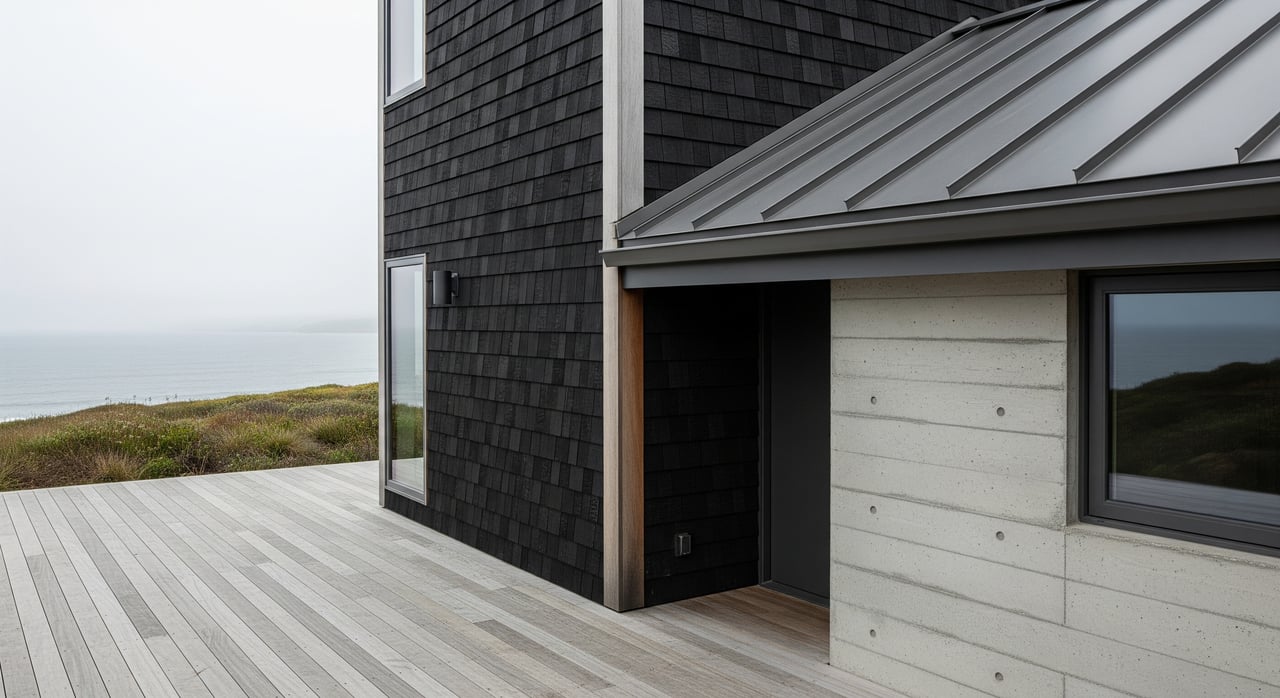
- Metal cladding can perform well when you choose marine-rated options. Look for aluminum with anodized or PVDF coatings or appropriate stainless. Avoid untreated steel near the ocean.
- Vinyl siding is lower cost but can struggle with wind and UV. It is not the top choice for highly exposed sites.
Roofing built for wind and spray
- Standing seam metal roofing offers long service life and strong wind resistance when properly specified. Choose corrosion-resistant fasteners and premium coatings such as PVDF, or anodized aluminum.
- Concrete or clay tile performs well against salt and sun. It is heavy, so verify the structure and use high-quality underlayment and flashing.
- Architectural asphalt shingles are economical but have a shorter life in coastal conditions. Choose high-wind rated products and plan for more frequent replacement than metal or tile.
Windows and doors that seal and last
- Durable frames include fiberglass, aluminum-clad wood, and marine-grade aluminum with thermal breaks. Vinyl can be acceptable if performance ratings and local durability are proven.
- Insulated glass with low-E coatings helps comfort and efficiency. Make sure units are rated for local wind loads.
- Use stainless steel hardware wherever practical. For exposed locations, 316 stainless offers superior corrosion resistance. Include sill pan flashings and proper thresholds.
- Exterior doors should have corrosion-resistant cores and finishes. Avoid untreated steel at the coast.
Decking and railings that endure
- Dense tropical hardwoods like ipe and capped composite decking hold up well near the ocean. Pressure-treated wood is workable but needs consistent care and can accelerate fastener corrosion.
- Use stainless steel fasteners for all exterior deck and rail connections. Where possible, choose 316 stainless.
- Railings in stainless cable or powder-coated aluminum are popular and durable when paired with stainless hardware.
Hidden details that extend lifespan
Use a ventilated rainscreen
A small air gap behind your siding lets water drain and surfaces dry. A ventilated rainscreen reduces stress on paint and coatings and protects sheathing from repeated wetting. It is one of the highest value upgrades for coastal cladding.
Choose a robust water-resistive barrier
Install a high-quality housewrap or building paper and maintain continuous drainage to the exterior. Tape and seal penetrations as directed by the manufacturer. Include weep details where walls meet foundations and at deck interfaces.
Flashing and sealants done right
Pan flashings at windows and doors, through-wall flashings, diverter flashings at roof-to-wall intersections, and protected eaves keep water out. Maintain sealants and replace them at the first sign of failure. Flashing quality often matters more than the siding you choose.
Control corrosion at the source
- Standard galvanized hardware corrodes faster in salt air. Stainless steel, especially 316, is the coastal standard for exposed fasteners, connectors, and anchors.
- If you must mix metals, isolate them to prevent galvanic corrosion. Use gaskets or coatings where dissimilar metals meet.
- For concrete exposed to chlorides, talk with your engineer about epoxy-coated rebar or other corrosion mitigation.
Foundations and structure that hold up
Concrete and reinforcing choices
Use low-permeability concrete mixes and provide proper cover over reinforcing steel. In areas with higher chloride exposure, corrosion-inhibiting admixtures and protective coatings are worth consideration. These strategies improve durability and reduce future repairs.
Plan for flood and wave exposure
Where flood risks exist, elevated pier foundations can reduce damage and keep lower framing dry. Choose waterproofing and membranes rated for flood conditions. Verify all elevations and setbacks with local planning and floodplain maps.
Interior moisture and comfort
Assemblies that manage moisture
In a humid marine climate, assemblies need to dry. Closed-cell spray foam can help with air and moisture control when installed per code and manufacturer specs. Use mold-resistant gypsum or cement board in bathrooms and lower levels.
Ventilation that prevents mold
Provide code-compliant attic and crawlspace ventilation or consider a conditioned crawlspace approach. Good HVAC design and filtration help limit condensation and improve indoor air quality.
Cost, maintenance, and resale
Upfront versus lifecycle costs
Coastal-grade metals, fiber cement, and metal roofing cost more at install. Over time, they often cost less due to longer service life and less frequent repainting or replacement. On resale, buyers value visible coastal upgrades, which can reduce concerns about hidden damage.
Simple maintenance that pays off
- Rinse exterior surfaces with fresh water periodically to remove salt.
- Inspect and refresh caulks and sealants every one to two years.
- Recoat or powder-coat metal when finishes begin to chalk or scratch.
- Inspect fasteners and connectors on decks and rails annually and replace any that show corrosion.
- Keep vegetation and soil graded away from walls to limit splashback and trapped moisture.
What impresses buyers in El Granada
Buyers respond to durable, low-maintenance choices that clearly address the Coastside climate. Fiber cement with a rainscreen, stainless fasteners, metal roofing, and well-detailed windows are strong selling points. Documented maintenance and transferable warranties help build trust and support your price.
Buyer and seller checklists
Buyer walk-through checklist
- Exterior walls: Identify siding type and look for a ventilated rainscreen detail at trim and penetrations.
- Fasteners and metal: Confirm stainless hardware on decks, rails, and exposed connections.
- Roofing and flashings: Check for quality metal or tile roofing, intact flashings, and sealed roof-to-wall joints.
- Windows and doors: Look for sill pan flashings, solid thresholds, and smooth operation. Note any corrosion on hinges or locks.
- Decks: Review board type and inspect ledger connections and posts for corrosion or softness.
Seller preparation checklist
- Rinse and clean exterior surfaces to remove salt buildup.
- Touch up paint and repair failing sealants and flashings.
- Replace any corroded fasteners on decks, rails, and gates with stainless.
- Gather receipts, warranties, and installation specs for coastal-grade materials.
- Note key upgrades in your listing description to highlight resilience and care.
Style without sacrificing durability
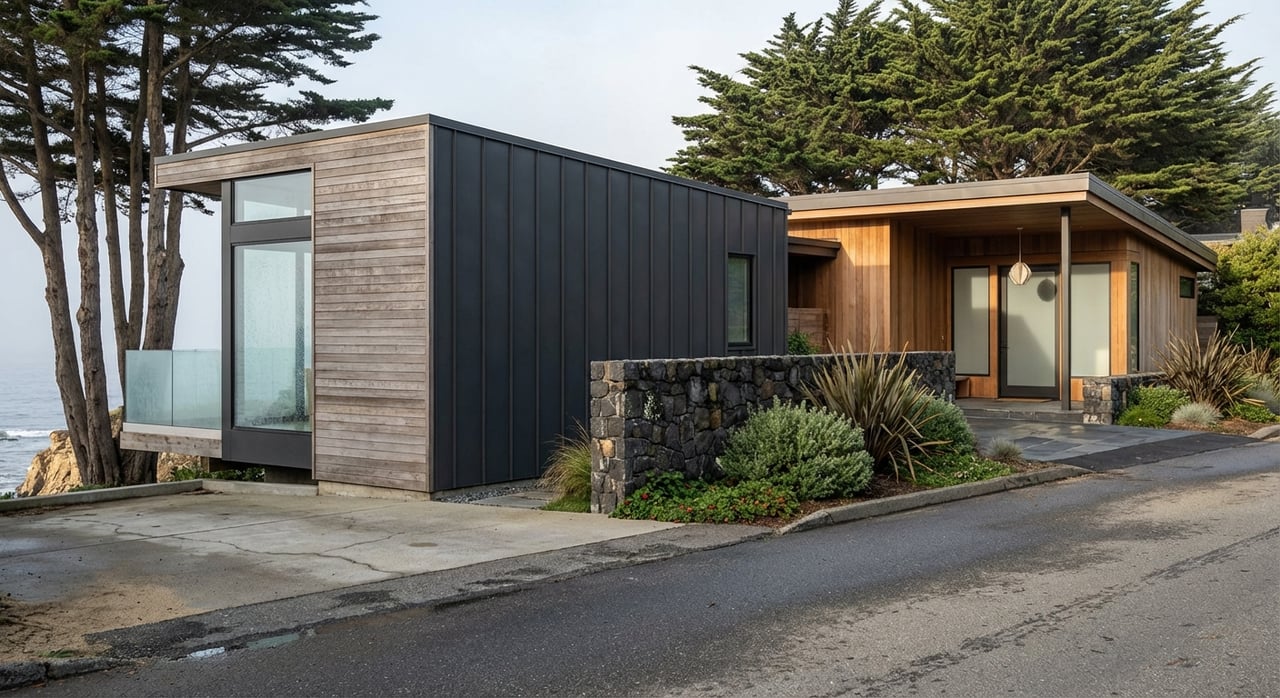
You can match neighborhood character and still use resilient materials. Many modern claddings and coatings mimic natural wood or traditional stucco textures. Choose finishes that align with community design while meeting coastal performance needs.
Permit and planning steps
- Confirm whether your property lies in the coastal zone and if a Coastal Development Permit is required by San Mateo County Planning and Building.
- Review California Building Standards Code Title 24 and ASCE 7 references for wind and seismic requirements that affect product ratings.
- If near mapped flood areas, consult FEMA Flood Insurance Rate Maps and local floodplain guidance for elevation and material selections at lower levels.
- Line up contractors with proven coastal Bay Area experience and request references for El Granada or Half Moon Bay projects.
The bottom line for El Granada homes
Material choice matters, but detailing and maintenance matter more. Focus on rainscreens, robust flashing, and stainless hardware first, then choose coastal-rated siding, roofing, and windows that fit your budget and style. With the right plan, you will spend less time fixing and more time enjoying the Coastside.
Ready to align your improvements with market value or prep your home to sell with confidence? Reach out to Matt Aragoni for local guidance, a pricing strategy, and a plan tailored to your property.
FAQs
Which exterior cladding lasts longest in El Granada?
- Fiber cement with a ventilated rainscreen and proper flashing delivers long life with lower maintenance than painted wood in coastal conditions.
Do I really need stainless steel fasteners near the ocean?
- Yes for exposed exterior work and decks, since stainless, especially 316, resists chloride corrosion much better than galvanized options.
How often will I need to repaint a coastal home?
- Expect more frequent repainting than inland, with actual timing based on exposure, product quality, and maintenance like salt rinsing.
Will marine-grade upgrades help resale value?
- Often yes, because buyers see lower risk of hidden decay and appreciate documented coastal-ready materials and details.
Do coastal renovations require special permits in El Granada?
- They can, especially in the coastal zone or flood areas, so check with San Mateo County Planning and Building and review state coastal policies early.
Can I keep a traditional look and still build for durability?
- Yes, many modern materials and finishes mimic classic wood or stucco while improving moisture and corrosion performance for the Coastside.